What's In A Name?

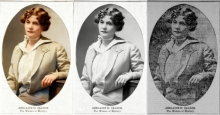
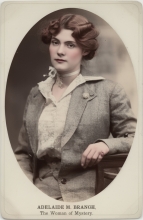
Adelaide Branch’s adoption in 1914 of the pseudonym Mary A. Douglas was a deliberate act of reinvention following the public scandal surrounding her relationship with Melvin Couch and her subsequent voluntary confinement in his law office. The name change coincided with her physical relocation—first to Bermuda with the Sinclairs, then to Croton-on-Hudson, New York, then Morningside Heights in the city, and finally Washington, DC. She lived under this new identity for the rest of her life. Unlike the sensationalized "hidden woman" narrative that defined her in the press, "Mary A. Douglas" allowed her to dissociate from her past, secure employment and social standing, and engage in intellectual and political dialogue.

Dorothy Dix's interview (1913)

One journalist of the day who was granted an interview by Adelaide Branch before she left Monticello was Dorothy Dix (nee Elizabeth Meriwether Gilmer), the first and most famous newspaper dispenser of advice to the lovelorn. Dix said a fair telling of the story of Adelaide Branch required a woman’s perspective. With an estimated audience of 60 million readers, Dorothy Dix was a columnist employed by William Randolph Hearst. At the time of her death, her obituary said she was the highest-paid and most widely read female journalist.

On Spinsters (Mary A. Douglas, 1917)

This essay by Mary A. Douglas is deeply informed by her own lived experience of "social death" and rebirth. After the 1913 scandal involving her residency in the office closet of her "heart husband" until his sudden death resulted in her exposure, her defense of the "spinster" (or the woman living outside traditional marriage) was effectively a manifesto for her own new life.

RSS Feed