
Did She Vote? The Genealogical Proof Standard at Work

Working the identification through the Genealogical Proof Standard, this page tests the evidence: she registered in 1924 and again in 1925, 1926, and 1928, and the registers record her ballot as delivered and voted in each of the three register elections for which Manhattan voting records are publicly available.

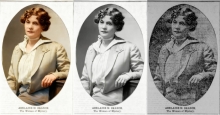
From Progressive Manifesto to Pulp Romance: The Literary Evolution of Mary A. Douglas (1917–1938)

Following her 1913 rescue from Melvin H. Couch's secret law office partition in Monticello, New York, Adelaide Mary Branch (1873–1948) adopted the reclaimed identity Mary A. Douglas. Over the next three decades, she navigated two distinct spheres of American publishing: high-minded Progressive Era social critique and commercial pulp fiction. This comparative analysis contrasts her landmark 1917 feminist essay, "What the World Owes to Spinsters" (published in Mitchell Kennerley's The Forum), with her 1930 commercial romance story, "A Silent Altar" (published in Frank A. Munsey's All-Story). Together, these works illustrate how an unmarried, self-supporting woman adapted her literary talents to achieve economic autonomy during the Great Depression.
Subscribe to Mary Douglas