
Branch interviewed by Hearst columnist Dorothy Dix
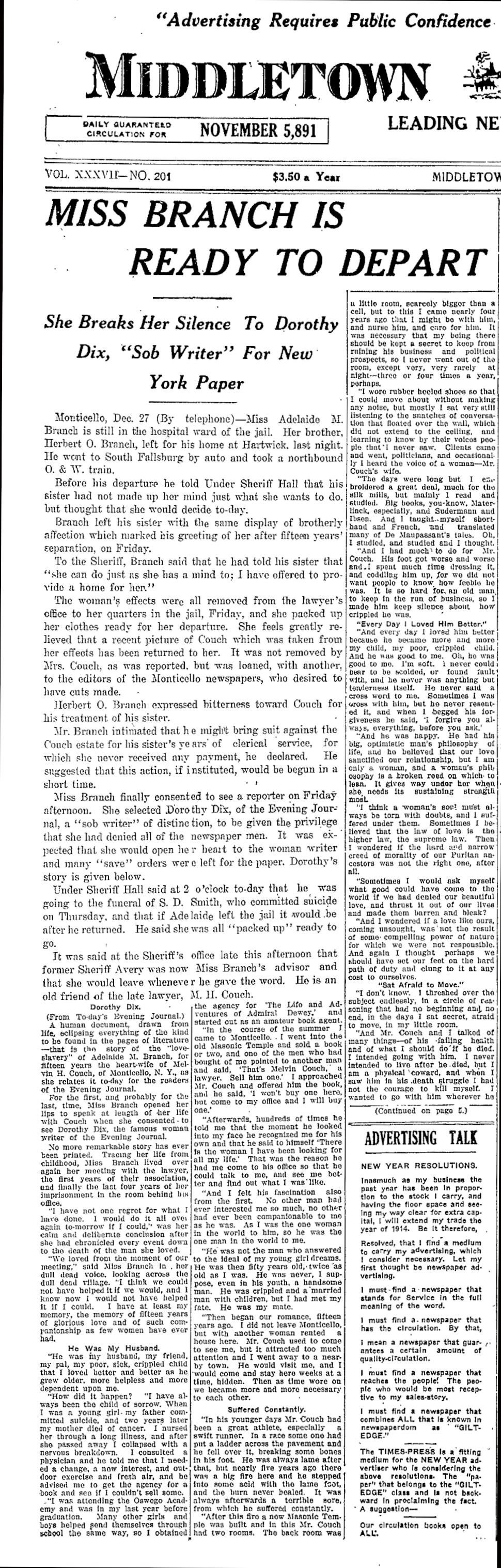
One journalist of the day who was granted an interview by Adelaide Branch before she left Monticello was Dorothy Dix (nee Elizabeth Meriwether Gilmer), the first and most famous newspaper dispenser of advice to the lovelorn.
Dix said a fair telling of the story of Adelaide Branch required a woman’s perspective. With an estimated audience of 60 million readers, Dix was a columnist employed by William Randolph Hearst. At the time of her death, her obituary said she was the highest-paid and most widely read female journalist.
Herself the victim of an unhappy marriage (Dix's husband is said to have been stricken with a mental illness within a year of their marriage), Dix was a pioneer “sob sister” – with 16 years of writing for Hearst's New York Journal.[1] Dix’s writing style was emulated by other women journalists of her day, including Winifred Black, Nixola Greely-Smith, and Ada Patterson. Randolph Hearst loved her writing because it sold papers. The public ate it up.
For whatever reason, some of Dix’s newspaper contemporaries thought her account of the case of Adelaide Branch her finest work. Her account of Adelaide
Dix stayed in for a time, writing about the messages of friendship and sympathy that came to Miss Branch. Even in the little town, where the judge's family had been prominent for generations, there was a strong feeling in favor of Adelaide. “There is no cry of the Magdalene here, no drawing away from her," Dorothy found, but only a wish “that such a love might have been differently bestowed.”
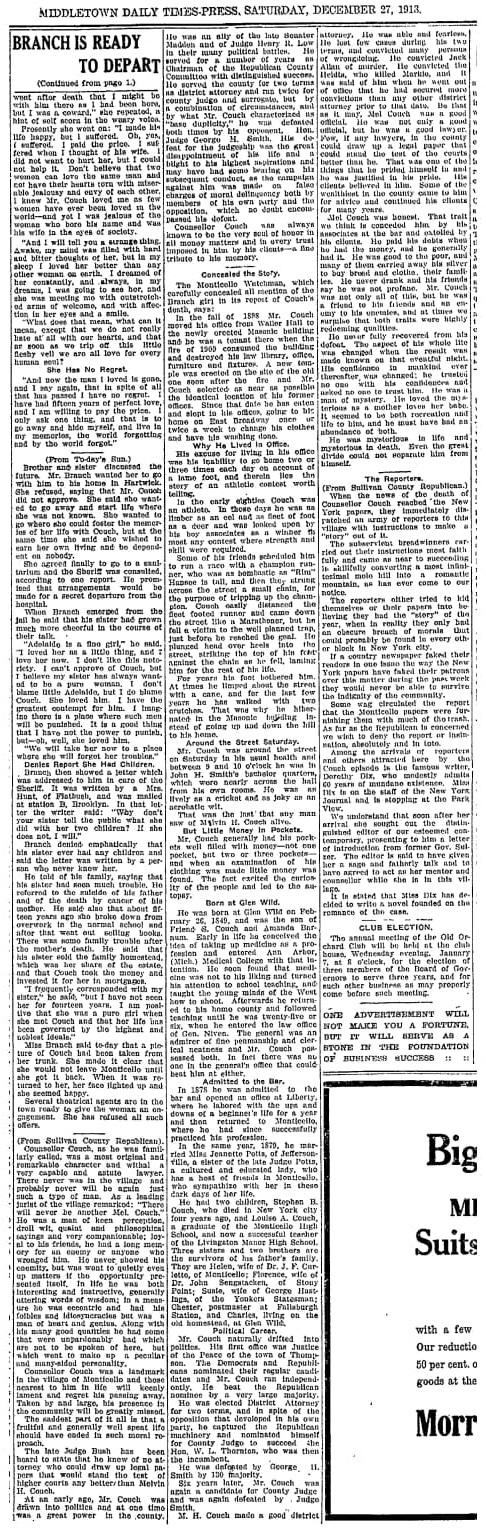
Middletown Times-Press, December 27, 1913, p. 1, 5
[1] Time, obituary, December 24, 1951.
Tags
- Log in to post comments