From Progressive Manifesto to Pulp Romance: The Literary Evolution of Mary A. Douglas (1917–1938)

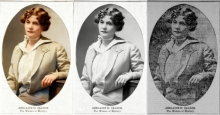
Following her 1913 rescue from Melvin H. Couch's secret law office partition in Monticello, New York, Adelaide Mary Branch (1873–1948) adopted the reclaimed identity Mary A. Douglas. Over the next three decades, she navigated two distinct spheres of American publishing: high-minded Progressive Era social critique and commercial pulp fiction. This comparative analysis contrasts her landmark 1917 feminist essay, "What the World Owes to Spinsters" (published in Mitchell Kennerley's The Forum), with her 1930 commercial romance story, "A Silent Altar" (published in Frank A. Munsey's All-Story). Together, these works illustrate how an unmarried, self-supporting woman adapted her literary talents to achieve economic autonomy during the Great Depression.
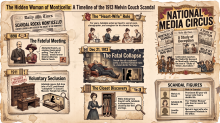
The Monticello Incident, October 1913

Summary of the Case: In December 1913, a sensational scandal broke in Monticello, Sullivan County, New York, following the sudden death of former county prosecutor and lawyer Melvin H. Couch. Upon Couch's death from a ruptured aorta in his law office, authorities discovered that Adelaide Mary Branch (1873–1948), an educated former teacher and traveling book agent, had been living secretly for three years (1910–1913) in a small partitioned room off his office. Branch referred to herself as his "heart wife," tending to his declining health in near-total isolation.

The Brass Check in the Digital Age: Upton Sinclair’s Media Critique and the Crisis of Modern Journalism

Pre-Orders

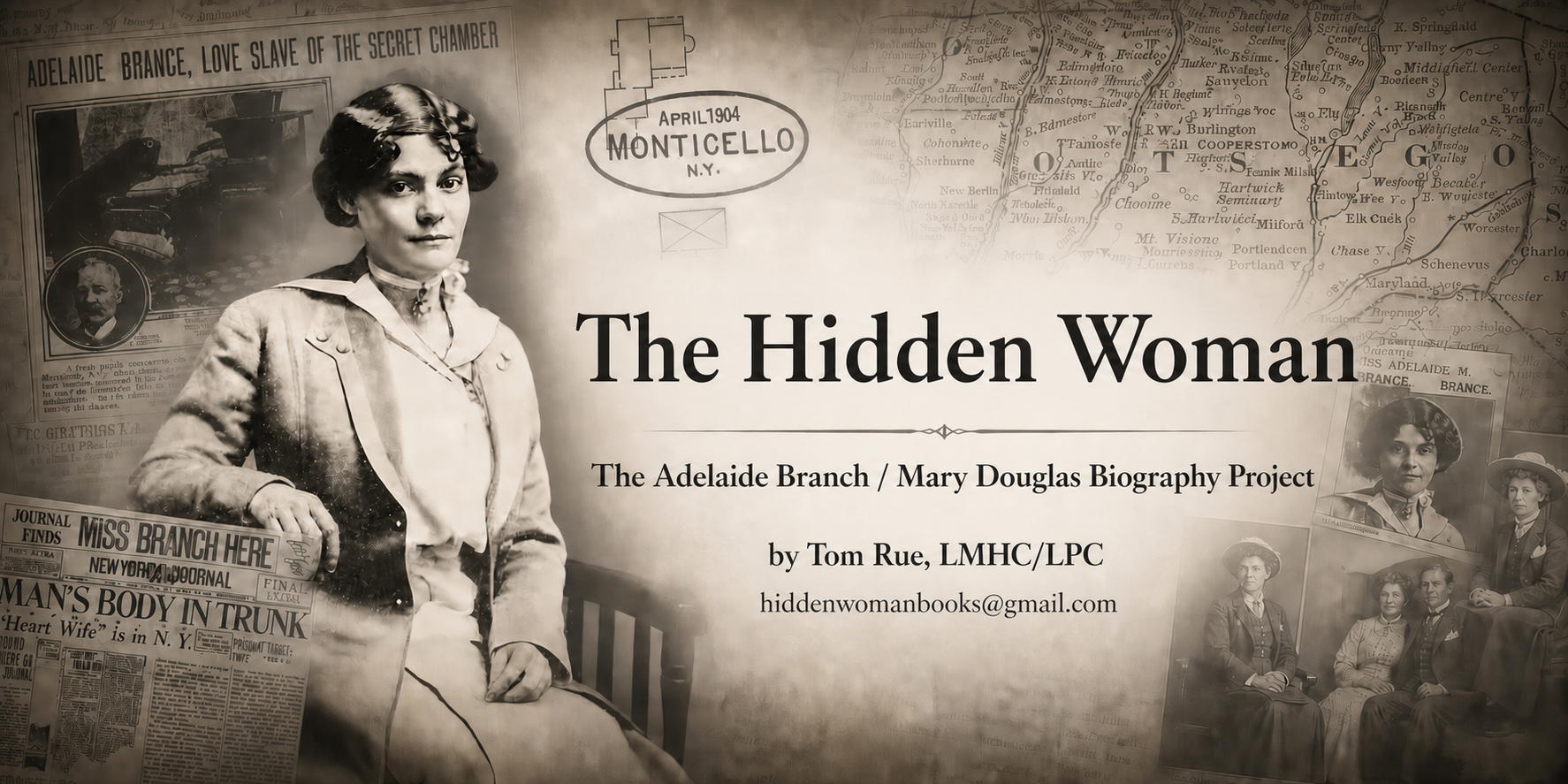
The Hidden Woman (banner)

This website offers a preview of what to look forward to in the publication of this reconstruction of Adelaide Branch's full life, from her birth in Hartwick, NY, in 1873 until she died in 1948 in Manhattan.